However, its founder’s idealism was overshadowed by the legal and ethical implications of facilitating such transactions. The Silk Road was an enigmatic marketplace that emerged from the shadows of the internet, capturing the imagination of many with its clandestine operations. Unlike your typical online marketplace, it was not accessible through standard web browsers, instead residing on the dark web and requiring the use of the Tor network for access. This veil of anonymity allowed users to engage in transactions with a level of privacy that was unprecedented at the time. However, the Silk Road was more than just a marketplace; it was a microcosm of libertarian ideals and a testbed for cryptocurrency like Bitcoin. As dark web markets grew more sophisticated, so did law enforcement strategies.
Donald Trump Cancels Kamala Harris’s Secret Service Protection
Force sent DPR photos of the staged torture, followed by photos of Green, facedown on the floor, pallid, smeared with Campbell’s Chicken & Stars soup—the supposed aftermath of asphyxiation. Green holed up in his house (he had to stay out of sight as part of the ruse) in a kind of self-imposed witness protection, and Force went back to Baltimore. DPR sent $40,000 to a Capital One account controlled by the government as an advance. DPR never got back the stolen bitcoins, but once in receipt of the putative proof of death, he sent another $40,000 for a job well done. Moments later, DPR messaged Nob that he had a “problem” in Utah that required violence. According to the backstory Force had created for Nob, his criminal repertoire included enforcement and collection talents, so he acted the part.
Stolen personal data — which can lead to identity theft — was also a big commodity. Run a dark web scan and you may be surprised to find your own personal data up for sale. When Silk Road was shut down, 144,000 Silk Road Bitcoins were seized. In 2015, $13.5 million worth of the Silk Road Bitcoins were auctioned off.
New iterations of the Silk Road began popping up all over the darknet. On Ulbricht’s day in court, his defense attorneys attacked the fragility of the matching online identities. They brought up the meaning of the name Dread Pirate Roberts, taken from a story where the name and duties of a person can be passed on seamlessly from one to another. They presented their own conspiracy theories in which Ulbricht was nothing but a fall guy and bet their case on the jury being unable to understand the coded world of darknet transactions. But Ulbricht had only gone dark and had a new set of online advisers and fans, some of whom would prove to be devastatingly disloyal. While his ‘shrooms sprouted, Ulbricht taught himself computer programming.
- Soon, Silk Road attracted buyers and sellers from around the world to his illegal drug marketplace.
- All transactions were conducted in cryptocurrency — namely Bitcoin — which further ensured anonymity.
- In addition to his prison sentence, he was also ordered to pay more than $183 million.
- In October 2013, members of the FBI cyber security team traveled to San Francisco to arrest the man they believed was the mastermind behind Silk Road, Ross Ulbricht.
Who Is Ross Ulbricht, Founder Of Drug Marketplace Silk Road, Now Pardoned By Trump?

It was the culmination of a two-year investigation into a vast online drug market called Silk Road. The authorities charged that Ulbricht, an idealistic 29-year-old Eagle Scout from Austin, Texas, was the kingpin of the operation. They said he’d reaped millions from the site, all transacted anonymously with Bitcoin. They said he’d devolved into a cold-blooded criminal, hiring hit men to take out those who crossed him.
Trump Pardons Ross Ulbricht, Creator Of Dark Web Marketplace Silk Road
He earned some $80 million in Bitcoin through illicit commissions and generated over $1.2 billion in turnover. Schneier, the national security technology expert and blogger, is extremely bleak about online privacy. “Welcome to a world where Google knows exactly what sort of porn you all like, and more about your interests than your spouse does,” he wrote in a blog post six months before Ulbricht was arrested. The trial revealed some, but not all, of the tricks FBI agents used to snatch Ulbricht out of the Dark Web. First, agents hacked into Silk Road after locating its servers in Iceland. The government has never explained how it located those servers, at least to the satisfaction of tech experts.
Find Us On Social Media
The Silk Road emerged as the first modern dark web marketplace, revolutionizing how people engaged in illegal online activities. Founded by Ross Ulbricht, the platform operated on the Tor network, ensuring anonymity for its users. Ulbricht’s motivation behind creating the Silk Road stemmed from a desire to build a free market that operated outside the control of governments and traditional financial systems. The Silk Road on the dark web is often described as one of the most infamous online black markets in history. It operated on the hidden corners of the internet, outside of traditional search engines, and accessible only through encrypted software like Tor.
Civil Forfeiture Of Silk Road-associated Bitcoins
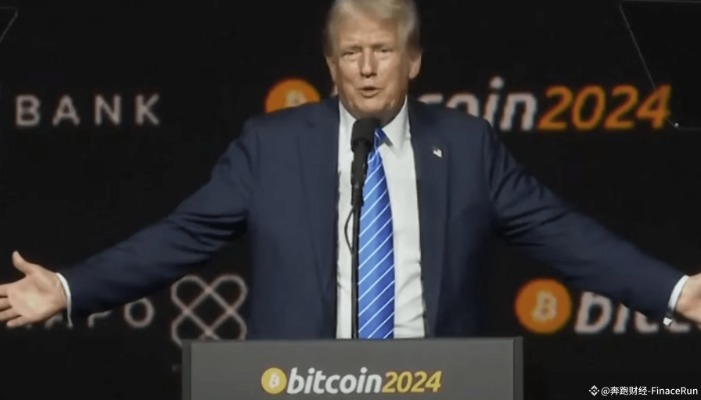
Libertarian activists, who generally oppose criminal drug policies, have long believed that US government investigators overreached in building their case against Silk Road. “The scum that worked to convict him were some of the same lunatics who were involved in the modern day weaponisation of government against me,” Trump said on his social media platform, Truth Social. Ulbricht, for his part, took to social media to celebrate Trump’s election victory and remind him of his promise. One week after the election, he wrote on X that he “can finally see the light of freedom at the end of the tunnel.” He promised to commute Ulbricht’s sentence during the Libertarian National Convention in Washington in May of 2024, and has gotten close to so-called “techno libertarians,” like Tesla CEO Elon Musk. Trump has also publicly promised to make the United States the “crypto capital of the planet,” propping up prominent Bitcoin users and supporters.
What Was Ross Ulbricht Convicted Of?
At the helm of this notorious marketplace was its founder, Ross Ulbricht, who orchestrated the entire operation from behind his computer screen. His arrest and subsequent conviction sent shockwaves throughout the online community, highlighting the potential dangers lurking within the dark web. ULBRICHT created Silk Road in approximately January 2011, and owned and operated the underground website until it was shut down by law enforcement authorities in October 2013. Operating on the dark web, Silk Road offered a range of illegal products, including drugs, counterfeit documents, and hacking tools. The marketplace operated under the guise of anonymity, utilizing Tor and Bitcoin to ensure the privacy and security of its users.
His arrest marked the beginning of the end for the Silk Road, as the FBI seized the site in 2013. Despite his intentions of creating a libertarian utopia, Ulbricht’s legacy is marred by the illegal activities his platform enabled. His trial highlighted the challenges of regulating the dark web and the complexities of digital anonymity. The Silk Road was the brainchild of Ross Ulbricht, who envisioned a free market unregulated by government oversight. By leveraging the anonymity of Tor and the decentralized nature of Bitcoin, Ulbricht aimed to create a platform where individuals could freely trade goods and services. The site was launched in 2011, quickly gaining notoriety for its vast array of illicit goods, ranging from drugs to forged documents.
- Ross William Ulbricht was the creator and owner of the Silk Road website who was deeply interested in libertarian economic and political theory while studying engineering at Penn State University.
- Some of these successors, such as AlphaBay and Hansa, grew even larger than the Silk Road at its peak.
- As we continue to explore the intersection of technology and privacy, tools like Forest VPN play a crucial role in safeguarding our online activities.
- The case of Ross Ulbricht and Silk Road raises significant legal and ethical questions.
- … And then, below that, his soldiers, which were his lower-level employees that didn’t know too much but were doing the mop-up duty.
That year, Ulbricht was arrested and charged with money laundering, computer hacking, and conspiracy to traffic narcotics. He was even accused of attempting to have at least five people killed because they threatened to reveal the truth behind Silk Road. Several darknet marketplaces currently exist that follow the Silk Road model, allowing anonymous cryptocurrency transactions on websites only accessible through dark web browsers. As the internet’s first widely used dark web market, Silk Road has a wild and seedy history, and it played a significant role in the emergence of Bitcoin. Learn all about Silk Road’s rise and fall and the dark web marketplaces that replaced it. Then, get a VPN to keep your online activity private and add a protective layer between yourself and the web’s darker side.
Some estimates are that the site generated more than $1 billion in sales, but more conservative estimates place the figure at about $200 million. More than one million transactions are estimated to have occurred on the site in total, which had about 100,000 users. The impact of Silk Road on law enforcement was also significant.