In some versions of this refrain, the dark web goes further than the neoconservatives of decades past, whose paeans to traditional college curricula often had little implications outside the campus walls. The implication is that zero-tolerance prohibitions in many newsrooms, classrooms or on social media that forbid dissent (or sometimes, even discussion) on these subjects has contributed to some once-reasonable people going down conspiracy theory rabbit holes. The intellectual dark web’s criticism of “woke” politics is centred on this disputed reality (and ideas about power) – spanning issues as diverse as biological sex and gender, debates over police violence and Black Lives Matter, and Diversity, Equity and Inclusion (DEI) policies. While they accept that social norms influence us, they object to the idea that language conjures reality into existence.

What Is The ‘Intellectual Dark Web’?
The ideas they claim to defend from politically correct opponents of truth are themselves a longstanding part of the United States’s conservative tradition. A common refrain on the dark web is to debunk various left-of-center critiques by arguing that what appears to be systemic inequality is actually the result of individual choices or behavior. In either case, the dark web’s impulse when confronted with claims of inequality is almost always to deny or justify it.
Get Podcast App
But his approach was despised by a group of young reactionaries who aimed to completely eradicate all “communistic” welfare programs, protect segregation, and install an explicitly Christian supremacist government. Three of the most prominent leaders of this faction were National Review creator William F. Buckley Jr.; Robert Welch, founder of the John Birch Society; and Leo Bozell Jr., Buckley’s brother-in-law, coauthor, and sometime business partner. Just over six years ago, the New York Times published a splashy essay by staff editor and writer Bari Weiss hailing an “alliance of heretics” called the “Intellectual Dark Web” whose members supposedly existed apart from the traditional left and right political spectrum. So, here’s one cheer for Sam Harris for naming and shaming (some) of his past allies and their unsavory career moves. But only one cheer, because he’s still letting some mortifying IDWers off the hook for behavior he’s decried in others, and he hasn’t yet truly reflected on why he was so taken in by dim careerists and a movement built more on emotional opposition to wokeness than a noble pursuit of truth and vigorous debate. Regarding Harris’ career-making endorsement of Rubin—the evidence was always in plain sight that Rubin’s utility was serving as a professional sycophant—a hype-man armed with a thin intellect and possessing no actual political convictions.
A teacher has no reason to teach if they are unwilling to learn from their students. The filter-bubble emanating from the IDW is a consequence of 20th century academia with its back against a wall. The price paid is in actual violence threatened by disturbed ideologues against truly progressive outlets for growth. Similarly, Sam Harris, a “New Atheist” and IDW apologist, has long opposed Islam on the basis of what he perceives to be a causal link between belief and behavior.
FAQs About The Intellectual Dark Web Podcast:
Further, online commenters (and YouTube commenters specifically) comprise a relatively marginal subset of total viewers, with only the most engaged among them actually taking the time to post comments; so making broader assumptions about YouTube audiences based solely on that data is not exactly the most foolproof method. Like nearly all libertarians, the members of the IDW were insistent that they were not just Republicans with an accent, and that in fact, they were actually leftists. Twenty-nine years after Laura Ingraham was the Times’s cover model, no one imagines that she is anything but a conventional Republican talking head. Likewise, as my friend Eiynah Mohammed-Smith and I discussed recently on her podcast, nearly everyone profiled by Weiss has dropped the pretense of being anything other than right-wing. Although almost no Americans agree with the eldritch particulars of official Libertarianism, more than a few have affinities for its sentiments, especially those who are young and nonreligious. Secular conservatives have next to no power in the Republican party, but there are quite a few of them in the general population, as surveys from the Pew Research Center have shown over the years.
This loss of relative social status helps explain the anger and resentment that Weiss describes and to some extent herself embodies. To understand the unhappiness of dark web intellectuals, you have to go back in time. The past few years have seen extraordinary changes in how left-wingers, liberals, and liberal centrists understand themselves. But go back a bit further and marriage equality for gay people was a controversial issue, and women’s rights and the status of African Americans in American life were the targets of intellectually lazy speculation. One of the mainstays embedded in IDW discourse is the question of the evolutionary relevance of religion. In 2018, Weinstein, Peterson, and Harris debated the usefulness of the conceptual belief in God.
Social Media Links
So there is a way in which everybody should think twice about why you expect the people are on the political spectrum where you think they are, because maybe they aren’t. In each case, you ought to just check whether or not you think that for a good reason or you just think that because you’ve heard that somebody’s over there. It at least, perhaps, seems to be particularly concerned with these kinds of phenomena that are occurring on the left. And one wonders…I mean, there are certainly examples of speech prohibitions on campuses on the right.
Sometimes called “the intellectual dark web,” it lives largely on the internet, but it isn’t a site or a channel, it’s a collection of thinkers (and it’s not the dark web of anonymous cybercrooks you’ve probably heard of). I actually see it not so much as a web but a nest containing rare birds that turn out to be more common than you might think. They use YouTube and podcasts to criticize political correctness and what they call “the regressive left” meaning extremes in left-wing politics. Critics of the Intellectual Dark Web say it just supports right-wing politics and think it encourages extremism about right-wing politics. Sam Harris used to say he was in the Intellectual Dark Web but then said he no longer supported it because it supports Donald Trump. The dark web frequently asserts that what may appear as trivial campus affairs have had a deep and dark influence on American society as a whole.
ProZD Race-Based Casting Controversy
The only future for the people that live under an empire of fellaheen (fèilā dìguó 费拉帝国) is a process that he calls “ethnic invention” (mínzú fāmíng 民族发明) — basically, concoct a local Culture (capitalized after Spengler, who saw Culture as the seed and Civilization as the plant into which it grows). The process involves de-Sinicization and rejection of Han culture (tuōzhī 脱支, “to escape Shina,” borrowing the derogatory archaic Japanese term for China). The need to build new tribal nations is made all the more pressing by Liu’s prediction of a Great Flood (Dàhóngshuǐ 大洪水), an impending apocalyptic event that will see much of the world’s central governments collapse. It was partly on Douban’s Auntie-loving Distant Evil 远邪 discussion board that the term “white left” was popularized, according to Fāng Kěchéng 方可成, academic observer of reactionary discourse. Liu’s later publications, including one of David Hume’s Tory revisionist The History of England and a biography of Ayn Rand, received mixed reviews (his skills as a translator have been called out repeatedly, most notably in this piece by Méi Zǔróng 梅祖蓉 for The Paper. “Strange how we once thought that the purpose of academics was to put forward bold ideas for the greater good of society,” Roberts told me. “Now the purpose of academia is for pseudointellectuals to trade fashionable lies so that they can build their pseudo careers.”
Recent Videos
But this only leads one to wonder whether membership is by invitation, request, or if the movement merely pulls public figures into its orbit like some trending black hole. Pinker has shared the stage with several IDW members but has never proclaimed himself a card-carrying member. Economist Glenn Loury and linguist John McWhorter aren’t mentioned in the article or on the website, but others have claimed they represent the “black wing” of the IDW. For starters, it did not determine exactly how long this radicalization process takes (though Ribeiro says he hopes to answer that question in the future).
- But if we fast-forward now, five years later, I think we have to make the argument that the IDW is a spent force.
- According to this way of thinking, the less power you have, the greater your worth, and vice versa.
- It’s almost as if life itself is inviting us to embrace difficulty—not as punishment but as a design feature.
- Once elected to Congress, Tea Party Republicans like Ted Cruz and others proceeded to shut down the federal government rather than attempt to reform it.
They assert, assess, and ascribe to reason and reflection, at least until that reason or reflection is challenged, or until they become complicit in the knowledge-power nexus they have agreed to expose. Such is the case of the privileged contrarians, the exiled academics who have sloppily formed the vestiges of an “Intellectual Dark Web;” a neoliberal enclave of “public intellectuals” determined to reduce the progress of pedagogy to the sterile hierarchy of pedanticism. In China, this intellectual dark web, or zhīshifènzǐ ànwǎng 知识分子暗网, has been embraced by internet users — but there are plenty of homegrown figures whose popularity rivals that of Jordan Peterson or Sam Harris. Like their comrades on 4chan, Chinese internet users go looking for stronger stuff, too, and it often leads them to an intellectual and blogger by the name of Liú Zhòngjìng 刘仲敬, who made a name for himself in the early-2000s on social media platforms like Douban 豆瓣 and Zhihu 知乎 (China’s version of Quora).
Precisely because we have changed so much, we have forgotten how bad things used to be. For decades, contrarianism on questions of race and gender — ranging from opposition to certain feminist projects or to affirmative action, to flirtation with the idea that black culture and even black brains were intrinsically inferior — was part of the intellectual mainstream of the center. Andrew Sullivan published an entire issue of the New Republic devoted to presenting, and debating, Charles Murray’s claim that black people were, on average, less intelligent than white people. Whether the figures involved with the IDW can take credit for opening up the Overton window, though, is doubtful. That’s not much of a legacy, since “social media leave so many other people Telling Truths as well as those guys were trying to do,” McWhorter observes wryly.
- They use YouTube and podcasts to criticize political correctness and what they call “the regressive left” meaning extremes in left-wing politics.
- The fellaheen (fèilā 费拉 in Chinese) are a post-historical people (史后之人 shǐ hòu zhī rén), and Liu marks the end of that history around the Qin Dynasty (221 BC–206 BC).
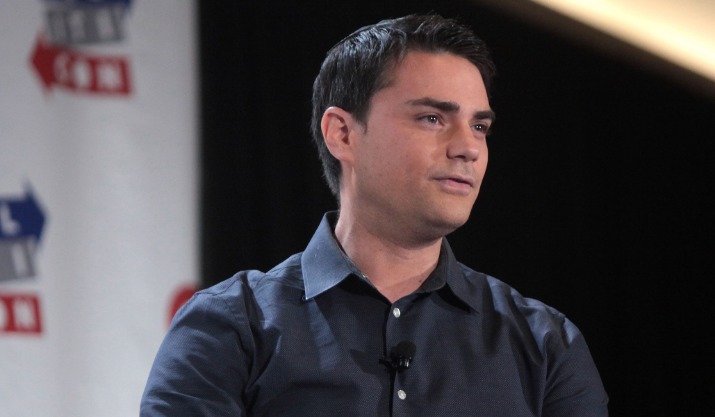
- The group includes the likes of Islamophobic blogger and neuroscientist Sam Harris, former Breitbart editor Ben Shapiro, failed libertarian comedian Dave Rubin, and Jungian clean-your-room guy Jordan Peterson.
- Early commentators on the digital revolution tended to assume that this would simply accelerate the existing trajectory of the print revolution, and thus continue Whig history.
- For the intellectual dark web, the worst aspects of campus politics are driven by postmodernism’s degradation of traditional liberal values.
An Autopsy Of The Intellectual Dark Web
Leon Wieseltier, who ran the New Republic’s book section as an independent barony, sought to exercise a droit du seigneur over female employees, as we learned last year. Slate, famous for its contrarian #slatepitch pieces, published several essays by William Saletan on race and research, which credulously accepted the arguments of J. Philippe Rushton, a race-obsessed researcher linked to the racialist Pioneer Fund and white nationalist New Century Foundation. The truth is rather that dark web intellectuals, like Donald Trump supporters and the online alt-right, have experienced a sharp decline in their relative status over time.
How Great Is The Distance Between The Intellectual Dark Web And The Hard Alt-right?
What they all share is not a general commitment to intellectual free exchange but a specific political hostility to “multiculturalism” and all that it entails. In previous decades, their views were close to hegemonic in the intellectual center. This was reinforced by individual intellectual incentives to cultivate contrarianism for the sake of fame, or, as Kitcher describes it, the “temptation to gain a large audience and to influence public opinion by defending ‘unpopular’ views” — views that, in truth, mirrored widespread societal prejudices.
Similar Content Being Viewed By Others
Their ranks are generally said to include Jonathan Haidt, Dave Rubin, Jordan Peterson, Sam Harris, Ayaan Hirsi Ali, Claire Lehmann, and James Damore. There is a particular trait evoked in a kind of playful teasing that actively counters intuition. It is the recognized life of inner mastery, which allows for a certain agency of repose. There is, decidedly, a lack of this exhibited by those who fall under the moniker of the IDW. Their lucrative, “free reach” populism, set on debasing the truest forms of free speech, and on dictating the parameters of cultural relativism, can only be countered through utmost vigilance, in media and beyond. One cannot claim to be an expert, without also proving their ability to be flexible.